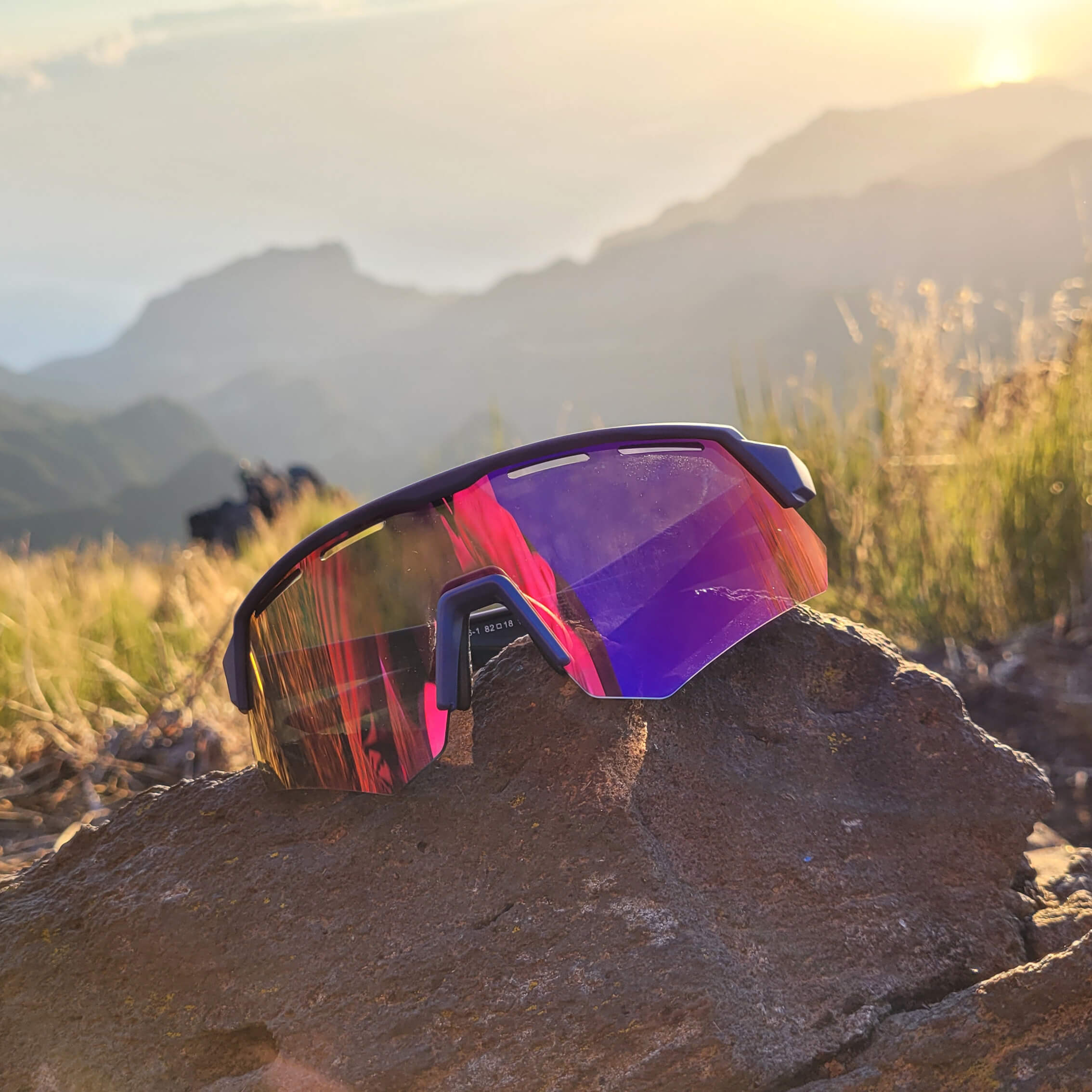


Cycling glasses are often described by lens technology: photochromic, polarised, clear, mirrored or interchangeable.
However, most riders do not begin with a technical specification. They begin with a practical problem.
A commuter may need one pair that works on both cloudy mornings and brighter journeys home. A road cyclist may struggle with reflected glare on open roads. A mountain biker may move repeatedly between sunlight and woodland shade. Another rider may need prescription compatibility, hands-free navigation or open-ear audio.
The best way to choose cycling glasses is therefore to start with where, when and how you ride.
Browse our complete collection of cycling glasses and sunglasses, including photochromic, polarised, smart and prescription-compatible designs.
In This Article
- Why Different Riders Need Different Cycling Glasses
- Cycling Glasses for Daily Commuters
- Cycling Glasses for Students and School Journeys
- Cycling Glasses for Road Cyclists
- Cycling Glasses for Mountain Biking and Trails
- Cycling Glasses for Long-Distance Riders
- Bluetooth Cycling Glasses for Connected Rides
- Cycling Glasses for Prescription Wearers
- Cycling Glasses for Multi-Sport Use
- How to Check Fit and Helmet Compatibility
- Quick Comparison
- Four Featured Cycling Glasses
- Final Thoughts
- Frequently Asked Questions
Why Different Riders Need Different Cycling Glasses
A cyclist travelling a short distance through a city does not necessarily need the same glasses as someone spending several hours on open country roads.
Before choosing, consider the following questions:
- What time of day do you normally ride?
- Does your route include shade, tunnels or woodland?
- Do wet-road reflections cause discomfort?
- Do you ride in one type of weather or several?
- Do you require prescription lenses?
- Will you use the glasses for other sports?
- Do you want audio, navigation or hands-free calling?
- Will the glasses be worn for short journeys or several hours?
Answering these questions will help narrow the choice before you begin comparing frame colours and styles.
Cycling Glasses for Daily Commuters
Daily commuters often experience a wide range of conditions.
The morning journey may begin beneath cloud or in softer light, while the return journey takes place in brighter sunshine. Urban routes may include shaded streets, exposed junctions, glass-fronted buildings and wet-road reflections.
For most commuters, versatility is more useful than an extremely dark fixed lens.
Recommended Lens: Photochromic
Photochromic lenses become darker in brighter outdoor light and return towards clear as conditions become darker.
This makes them useful for riders who do not want to carry another pair of glasses or stop to change lenses during the day.
The ROCKBROS Anti-Fog Photochromic Cycling Glasses are designed for multi-scene use.
They combine a clear-to-grey photochromic lens with an anti-fog design, wraparound coverage, adjustable nose pads and a lightweight TR90 frame. A prescription insert is also included for riders who need corrective lenses.
Commuters should prioritise:
- A lens suitable for mixed light
- A comfortable fit beneath or alongside a helmet
- Anti-slip nose and temple areas
- Wraparound wind protection
- Anti-fog performance
- Low weight for daily wear
Cycling Glasses for Students and School Journeys
Students cycling to school need equipment that is simple enough to use consistently.
A complicated interchangeable-lens set may be left at home or used incorrectly. A versatile photochromic lens can be more practical because it adjusts automatically when outdoor light changes.
The glasses should also provide enough coverage to help protect the eyes from wind, insects and dust on everyday routes.
Important features for student cyclists include:
- A secure but comfortable frame
- A lens that is not excessively dark
- UV protection
- Compatibility with the rider’s helmet
- Durable construction
- A protective storage case for a school or college bag
Cycling glasses are only one part of preparing for regular school journeys. Students and parents should also check the bike, brakes, tyres, lights, helmet and lock before the new term.
Read our complete guide to Back-to-School Cycling Essentials for Students and Families.
Cycling Glasses for Road Cyclists
Road cyclists often spend longer periods in open and exposed conditions.
Bright sunlight, wet tarmac and reflections from cars can make it harder to maintain comfortable vision. A secure frame is also important when riding at higher speeds or turning the head to check traffic.
Recommended Lens: Polarised
Polarised lenses help filter glare reflected from flat surfaces such as roads and water.
They are particularly useful when:
- Riding in strong sunshine
- Following open countryside roads
- Cycling near water
- Riding after rain while the road remains wet
- Dealing with low morning or evening sunlight
The ROCKBROS SP350 Polarised Cycling Sunglasses provide a versatile option for bright road riding.
They use a one-piece polarised lens with UV400 protection and a lightweight TR90 frame. Rubberised contact points and an adjustable fit support stability, while the anti-fog design adds value during higher-effort rides.
Road cyclists should prioritise:
- Glare reduction
- A wide field of vision
- Stable fit at higher speeds
- Low frame weight
- UV protection
- Helmet compatibility
- Ventilation around the lens
Road cyclists who regularly encounter cloud, woodland or changing shade may prefer photochromic lenses instead of a fixed dark lens.
Cycling Glasses for Mountain Biking and Trails
Mountain biking creates a different visibility challenge.
A rider may leave an exposed trail in bright sunshine and enter dense woodland only seconds later. A dark fixed lens that performs well in the open may reduce visibility beneath the trees.
Mud, dust, branches and insects also make physical eye coverage especially important.
Recommended Lens: Photochromic or Fast-Changing
Photochromic lenses are useful for trail riding because they adapt as surrounding light changes.
For many recreational riders, a conventional clear-to-grey photochromic lens provides a practical balance between shaded and exposed sections.
Riders who experience extremely rapid changes in brightness may benefit from an electronic fast-changing lens.
The ROCKBROS Intelligent Photochromic and Polarised Cycling Glasses use an electronic light-sensing system designed to change tint in around one second.
They also combine TAC polarised lenses, UV400 protection, a lightweight TR90 frame and adjustable soft nose pads.
Mountain bikers should prioritise:
- Fast adaptation to shade
- Wide wraparound coverage
- Stable nose and temple grip
- Lens ventilation
- Durable lens and frame materials
- Clearer visibility in lower light
- Compatibility with MTB helmets
Cycling Glasses for Long-Distance Riders
Long-distance riders may begin and finish in completely different conditions.
A ride can start in cool cloud, continue through strong midday sunshine and finish in softer evening light. Carrying several pairs of glasses takes up space, while stopping repeatedly to change lenses can interrupt the journey.
Recommended Lens: Photochromic
Photochromic cycling glasses are particularly convenient for sportives, touring and longer leisure rides.
They cover a wider range of conditions than a fixed dark lens and reduce the need to predict the entire day’s weather before leaving home.
For gradual changes in light, the ROCKBROS anti-fog photochromic glasses provide a lightweight and versatile option.
For routes involving tunnels, dense woodland or abrupt brightness changes, the intelligent fast-changing glasses offer a more advanced solution.
Long-distance riders should prioritise:
- Low pressure around the nose and temples
- Adjustable fit
- Low overall weight
- A wide and unobstructed field of vision
- Ventilation and anti-fog performance
- A lens suitable for several hours of changing conditions
Small pressure points that feel unimportant during a short test can become uncomfortable after several hours, so fit should be treated as seriously as lens technology.
Bluetooth Cycling Glasses for Connected Rides
Some commuters and leisure riders want to hear navigation instructions, take calls or listen to audio without using in-ear headphones.
Bluetooth cycling glasses combine protective eyewear with built-in speakers and hands-free controls.
The ROCKBROS Bluetooth Polarised Sunglasses connect to a smartphone for calls, music and voice-assistant control.
Open-ear speakers allow environmental sound to remain audible instead of completely sealing the ears. The glasses also include TAC polarised lenses, a flexible lightweight frame and magnetic charging.
Bluetooth cycling glasses may suit:
- Daily commuters using voice navigation
- Leisure riders who enjoy audio
- Riders who need occasional hands-free calls
- People who dislike in-ear headphones
- Cyclists who also want smart glasses for walking or outdoor activities
Important safety considerations
Open-ear speakers may help riders remain more aware of surrounding sounds than sealed headphones, but audio should still be kept at a sensible level.
Music, calls and controls should never distract from traffic, pedestrians, junctions or changing road conditions. Set the route before moving and only use controls when it is safe to do so.
Cycling Glasses for Prescription Wearers
Riders who require corrective lenses commonly have three options:
- Wear cycling glasses over normal glasses
- Order dedicated prescription sports lenses
- Use a prescription insert inside cycling glasses
A prescription insert can offer a practical balance between sports-style coverage and vision correction.
The ROCKBROS anti-fog photochromic cycling glasses include an internal prescription frame. Corrective lenses can be fitted separately according to the rider’s prescription.
Prescription-compatible cycling glasses may suit:
- Daily commuters
- Mountain bikers
- Road cyclists
- General outdoor sports users
- Riders who want wraparound eye protection
Prescription wearers should check:
- Whether the insert is included
- Whether an appropriate optician can fit the required lenses
- Eyelash clearance
- Ventilation between the outer lens and insert
- Space around the nose
- Comfort when wearing a helmet
Cycling Glasses for Multi-Sport Use
Not every rider wants glasses exclusively for cycling.
Some customers also run, drive, hike, fish or take part in other outdoor activities. In this case, the best option is normally a comfortable frame with lens technology that suits the activities performed most often.
Choose Polarised for Bright Outdoor Activities
Polarised glasses are useful when several activities involve reflected glare.
The SP350 can be used for cycling, driving, running, fishing and other outdoor activities. Its consistent polarised lens and versatile frame make it suitable for use away from the bike.
Choose Photochromic for Changing Environments
Photochromic glasses are better suited to activities that move between open sunshine and shade, including:
- Cycling and hiking
- Mountain biking and trail running
- Touring and sightseeing
- Long walks in changeable weather
Choose Bluetooth for Communication and Audio
Bluetooth glasses may suit users who want navigation, calls and open-ear audio across several daily activities rather than only while cycling.
Cycling Glasses for All-Day Wear
Some riders continue wearing their cycling glasses when stopping at cafés, walking around town or completing other parts of the journey.
For all-day use, look for:
- Lightweight construction
- Flexible temples
- Adjustable nose pads
- A frame that does not create pressure behind the ears
- A lens tint suitable for more than direct sunshine
- A versatile design that also works away from the bike
The SP350 is a practical fixed polarised option for bright all-day use. The clear-to-grey photochromic model is more adaptable when moving repeatedly between different outdoor light levels.
How to Check Fit and Helmet Compatibility
Even an advanced lens will not perform well if the glasses move or feel uncomfortable.
Check the Nose Area
The glasses should sit securely without sliding down when you lower your head. Adjustable or rubberised nose pads can improve grip and allow small changes to the lens position.
Check the Temples
The arms should remain secure without pressing painfully against the sides of the head. They should also fit comfortably with the helmet straps and retention system.
Check the Upper Frame
The top of the lens should provide good coverage when you look forward in a typical cycling position. It should not be pushed down by the front edge of the helmet.
Check Peripheral Vision
Large lenses can provide useful coverage, but the frame should not create distracting blind spots. Turn your head as though checking behind you and confirm that the glasses remain stable.
Check Eyelash and Cheek Clearance
The lens should not rub against the eyelashes or rest heavily against the cheeks. This is especially important when using a prescription insert behind the outer lens.
Quick Cycling Glasses Comparison
| Rider or Use | Recommended Type | Main Benefit |
|---|---|---|
| Daily commuter | Photochromic | Adapts to changing daily conditions |
| Student cyclist | Photochromic or clear | Simple and practical visibility |
| Sunny road cyclist | Polarised | Reduces reflected glare |
| Mountain biker | Photochromic | Handles sun and woodland shade |
| Fast trail rider | Electronic fast-changing | Responds quickly to sudden brightness changes |
| Long-distance cyclist | Photochromic | Covers several hours of changing conditions |
| Connected commuter | Bluetooth polarised | Hands-free audio, calls and navigation |
| Prescription wearer | Glasses with prescription insert | Combines correction and sports coverage |
| Multi-sport user | Photochromic or polarised | Suitable for several outdoor activities |
| Low-light rider | Clear or suitable low-light lens | Protects the eyes without excessive tint |
Four Featured Cycling Glasses
Best for Rapidly Changing Light
ROCKBROS Intelligent Photochromic and Polarised Cycling Glasses
Designed for riders moving quickly between bright and darker environments. The electronic system changes tint in around one second and combines light adaptation with polarised glare reduction.
Best for Connected Commuting
ROCKBROS Bluetooth Polarised Sunglasses
Designed for hands-free calls, navigation and open-ear audio. They combine built-in speakers with TAC polarised lenses and a flexible lightweight frame.
Best for All-Round Photochromic Use
ROCKBROS Anti-Fog Photochromic Cycling Glasses
A lightweight multi-scene option for commuting, road cycling, mountain biking and general outdoor use. They include a photochromic lens, anti-fog design, TR90 frame and prescription insert.
Best for Bright Roads and Glare
ROCKBROS SP350 Polarised Cycling Sunglasses
A versatile polarised option for sunny road rides, driving, running and other bright outdoor activities. The design combines UV400 protection with adjustable contact points and a lightweight frame.
Final Thoughts: Start with How You Ride
Choosing cycling glasses becomes easier when you stop searching for one pair that is supposedly best for everyone.
Start with your most common riding situation.
- Choose photochromic glasses when your route involves changing cloud, sunshine and shade.
- Choose polarised glasses when strong sunlight and reflected glare are the main problems.
- Consider electronic fast-changing glasses when transitions between bright and dark environments happen very quickly.
- Choose Bluetooth glasses when navigation, calls and open-ear audio are important parts of your journey.
- Look for prescription compatibility when vision correction is required.
The right glasses should feel like part of your normal riding equipment: comfortable, suited to the route and easy to use on every journey.
Explore all cycling glasses and sunglasses to compare lens types, frame designs and specialist functions.
Frequently Asked Questions
What type of cycling glasses are best for commuting?
Photochromic cycling glasses are a practical choice for commuting because they can adapt to different light levels between the morning and return journeys. Clear lenses may suit riders who commute mainly in low light.
What glasses are best for road cycling?
Polarised glasses are useful for bright road cycling and reducing reflected glare. Photochromic glasses may be better when the route regularly moves between sun, cloud and shade.
Are photochromic glasses good for mountain biking?
Yes. They are useful for mountain biking because they can become lighter beneath tree cover and darker on exposed sections. Secure fit and lens ventilation are also important.
Are Bluetooth glasses suitable for cycling?
Bluetooth glasses can provide hands-free calls, navigation and open-ear audio. Riders should keep audio at a sensible level and avoid allowing controls or calls to distract them from the road.
Can I get cycling glasses for prescription lenses?
Yes. Some cycling glasses include an internal prescription insert that can be fitted with corrective lenses by an appropriate optical professional.
Should cycling glasses fit over or under helmet straps?
The correct arrangement depends on the helmet and glasses. The important point is that neither item should interfere with the secure and comfortable fit of the other.
Are dark cycling glasses suitable for night riding?
Generally, a dedicated clear lens is more suitable for night riding. Dark fixed lenses reduce the amount of available light and may make road details harder to see.
Do I need anti-fog cycling glasses?
Anti-fog treatments and ventilation are useful in cool weather, during climbs, in humid conditions and on rides involving frequent stops. They cannot prevent every instance of fogging but can improve everyday usability.
Are polarised and UV400 the same thing?
No. Polarisation reduces reflected glare, while UV400 refers to ultraviolet protection. Check the product specification for both features separately.
Can I use cycling glasses for running or driving?
Many cycling glasses can also be used for running, hiking, driving and other outdoor activities. Choose a lens and frame that suit the light conditions and requirements of each activity.