
There is no single lumen number that suits every night ride. A short commute through well-lit streets asks different things of a front light than an unlit lane, canal path or fast rural descent. For UK riders, the sensible starting point is to choose brightness alongside beam shape, road lighting, ride speed, runtime and how considerate the beam is to other road users.
The legal baseline is not a lumen target
When cycling between sunset and sunrise in Great Britain, a bicycle must have a white front light and a red rear light lit, plus the required reflectors. The official guidance also recommends a steady front lamp in areas without good street lighting. Read the GOV.UK pedal-cycle lighting guidance. Lumens describe potential light output; they do not replace correct fitting, sensible aim or legal equipment.
A practical starting point for front-light brightness
| Typical route | Useful starting range | What to prioritise |
|---|---|---|
| Well-lit urban commuting | Around 300–600 lumens | A controlled beam, reliable mount and easy charging. |
| Mixed streets and darker paths | Around 600–1,000 lumens | Enough usable light to read the surface ahead without creating glare. |
| Unlit lanes and longer night rides | Around 1,000–1,600 lumens | Beam control, runtime and a secure mount, not just the largest peak figure. |
These are buying guides, not a safety guarantee. Slow down when conditions reduce what you can see, and lower or aim the beam carefully around pedestrians, other cyclists and drivers.
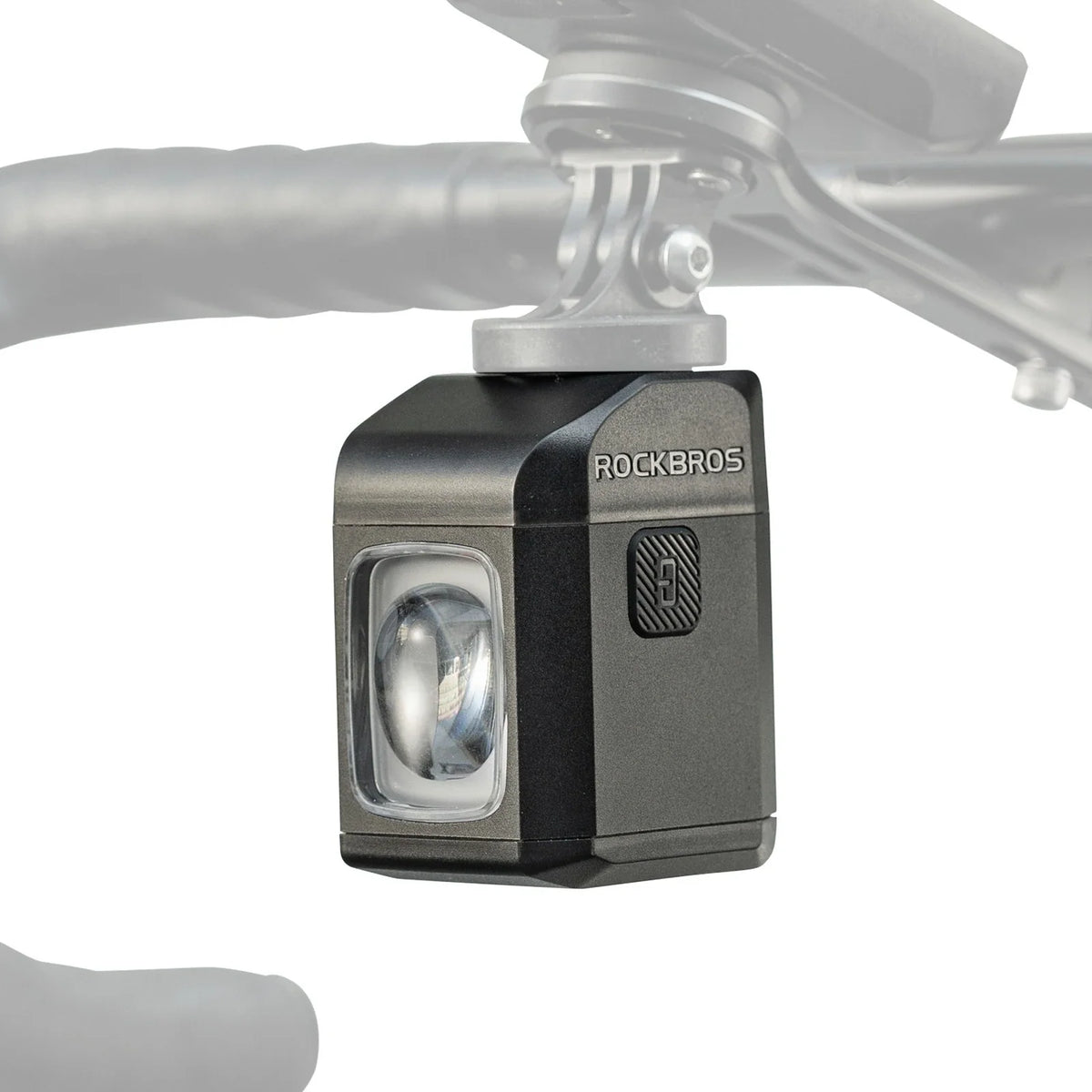
Three front-light options, one fixed comparison
The cards and table below are deliberately static for easy comparison. They reflect the listed product specifications captured on 30 October 2026. Product pages remain the source for current stock, versions and prices.

M5
1,000 lm
Lightweight everyday option for riders who want a brighter, controlled front light.

M6
1,000 lm
Smart city-riding choice for a regular commute and mixed road use.

M8
1,600 lm
More power for darker roads and riders who value a larger battery and remote control.
Quick comparison
| Compare | M5 | M6 | M8 |
|---|---|---|---|
| Brightness | 1,000 lm | 1,000 lm | 1,600 lm |
| Battery | 2,800 mAh | 2,800 mAh | 4,000 mAh |
| Wireless remote | Optional | — | Yes |
| Best suited to | Everyday commuting | Smart city riding | Darker roads and longer rides |
Why beam shape matters as much as lumens
A broad, controlled beam can be more useful than a poorly aimed light with a bigger headline figure. Look for a cut-off or anti-glare design if you ride on shared paths or roads. Mount the light securely, then angle it down to light the route ahead rather than the faces of approaching people. A light that stays aligned over rough ground is more useful than one that slowly points skywards.
Plan for the whole ride, not the first ten minutes
Check the quoted runtime in the mode you expect to use, charge before leaving and use a rear light as part of the same routine. For longer rides, it is sensible to carry a backup light or power option. Cold and wet weather make preparation more important, so check mounts and ports before you need them.
A simple night-riding check before you leave
- Is the front light charged and mounted firmly?
- Is the beam aimed at the road, not into oncoming traffic?
- Is the rear light switched on and visible?
- Does the chosen mode have enough runtime for the return trip?
- Are reflectors and lenses clean?
For a UK commute, start with the route you ride most often. Upgrade brightness when your route and speed demand more usable light, then keep the beam considerate and the setup dependable.