
Fitting a pannier bag to a bike rack is straightforward once the hooks, lower support and clearance are set up correctly. A secure fit keeps the bag stable on everyday UK commutes, reduces rattling and helps protect your heels, spokes and rear wheel.
Quick Answer
Check that your rear rack is firmly mounted and compatible with the pannier hooks. Place the bag on the rack, engage the top hooks, secure the lower clip or strap, then check that the bag cannot move sideways or touch the wheel. Load heavier items low and close to the rack, keep both sides balanced and take a short test ride before heading into traffic.
In This Guide
- Check your bike and rack
- Attach the pannier
- Check heel and wheel clearance
- Pack for a UK commute or tour
- Test the setup
- Solve common fitting problems
- Frequently asked questions
Check Your Bike and Rack
Before fitting the bag, inspect the rack and the points where it meets the frame. Tighten any loose bolts and check that the rack platform is not bent. A rear rack with a level top platform normally gives the cleanest pannier fit, while a rack with a narrow or unusually shaped platform may need a different hook position.
Confirm that the rack has enough side support for the bag and that the bag's hooks can reach the rack tubing. If the rack has a spring flap or a large rear light bracket, make sure it will not block the top hooks. Remove loose straps from the wheel area before you start.

Attach the Pannier
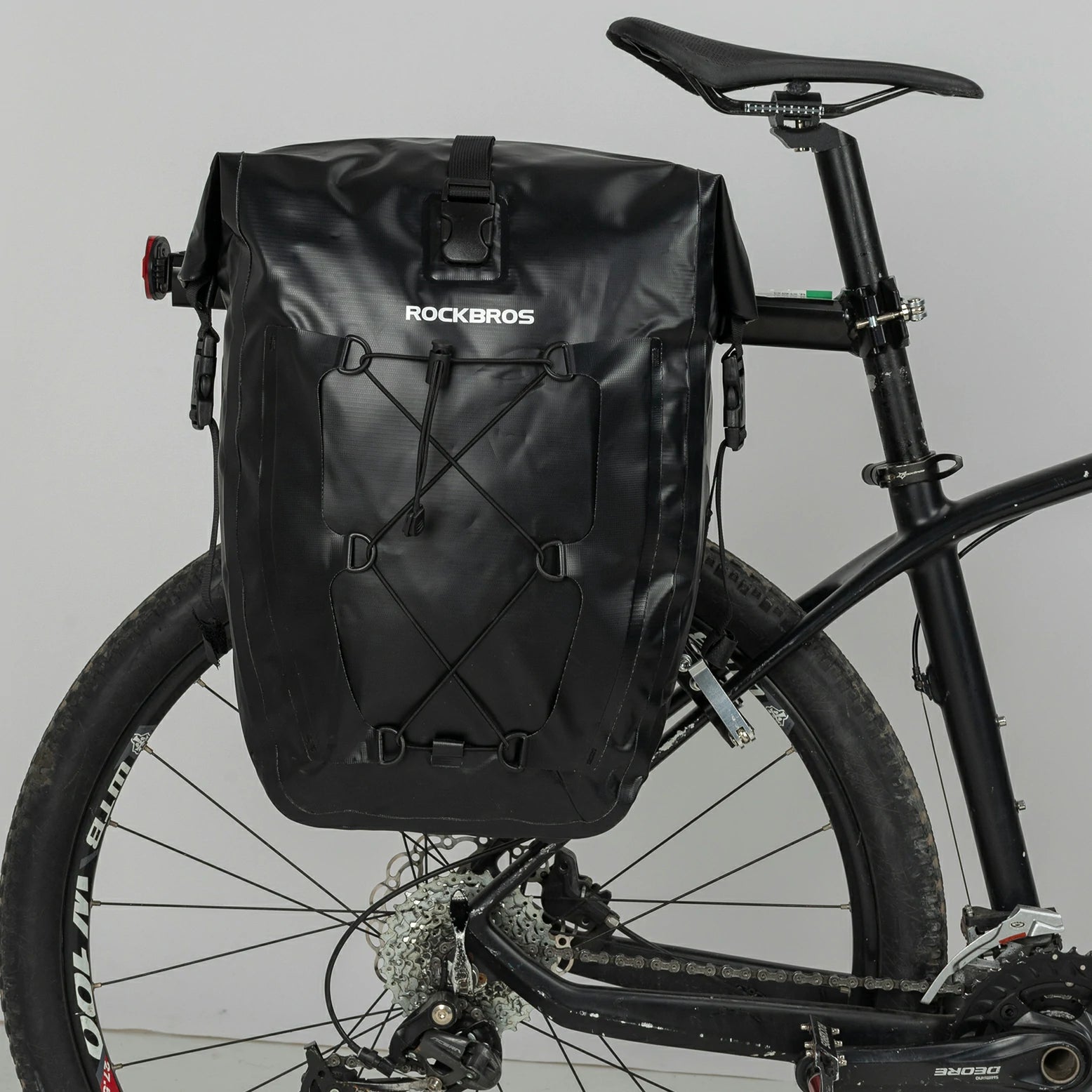
Stand on the drive-side or non-drive-side of the bike so you can see the rack rail clearly. Hold the pannier by its handle and lower it onto the rack. Start with the front hook, then place the rear hook over the rail. On many panniers, the hooks are spring-loaded or adjustable; they should sit fully over the tubing rather than resting on the edge.
Once the top hooks are engaged, use the lower clip, bungee or retaining strap to connect the bottom of the bag to the rack stay. This prevents the pannier swinging into the wheel when the road is uneven. The fixing should be firm enough to stop movement, but do not force a clip against a rack tube that is too large.
Give the bag a gentle sideways pull. It should remain attached while still being easy to remove deliberately. If you use panniers on both sides, fit the second bag in the same position so the load remains balanced. You can compare different options in the ROCKBROS bike panniers collection.
Check Heel and Wheel Clearance
Clearance matters more than how neat the bag looks from above. Rotate the cranks slowly by hand and look at the space between your heel position and the front edge of the pannier. Then spin the rear wheel and check that the bag, straps and lower clip stay clear of the spokes, tyre and mudguard.
If your heel touches the bag, move the hooks towards the rear of the rack if the design allows it. You can also move the saddle position slightly, but never solve a clearance problem by allowing the bag to sit loosely. If the wheel rubs, stop and reposition the bag before riding.
Pack for a UK Commute or Tour
Place dense items such as tools, a lock or a packed lunch low in the pannier and close to the rack side. Keep clothing and other light items above them. This lowers the centre of gravity and helps the bike feel predictable when you turn or stand on the pedals.
For a wet commute, use the bag's roll-top or zip closure correctly and keep a small dry pouch inside for electronics. Reflective panels or a bright outer colour can improve visibility in dark, rainy conditions, but they do not replace front and rear lights. Avoid leaving a long shoulder strap or loose compression cord near the drivetrain or rear wheel.

Test the Setup
Before a full journey, ride a short loop on a quiet street. Start slowly, brake gently and listen for rattles. Test a left and right turn, a few bumps and a shoulder check. After the loop, inspect the hooks and lower fixing again. New bags and racks can settle slightly after the first ride.
With a loaded pair of panniers, practise mounting the bike and putting a foot down. The bike may feel heavier when it is stationary, even when the handling is stable once moving. Keep the load consistent for your first longer ride and make adjustments one at a time.
Solve Common Fitting Problems
Bag moves from side to side
Check the lower clip or strap first. If it is not connected to a rack stay, the top hooks alone may allow too much movement. Also check whether the hook spacing matches the rack tubing.
Heel catches the bag
Move the bag rearwards if the hooks are adjustable, reduce bulky items near the front edge and confirm that the rack is long enough for the pannier. Do not ride until the heel clears the bag through a full pedal rotation.
Bag touches the wheel
Stop using the setup and inspect the lower support, wheel alignment and rack bolts. A bent rack or a loose stay can change the clearance under load. Keep all straps secured inside the bag.
Hooks are difficult to release
Support the bag with one hand while releasing the lower fixing with the other. If the hooks are under tension, lift the bag slightly to take pressure off them instead of pulling sideways.
Frequently Asked Questions
Can any pannier fit any rear rack?
Many standard panniers fit common rear racks, but hook spacing, tubing diameter and lower fixing position vary. Check the pannier and rack measurements before buying.
Should I use one pannier or two?
One pannier is convenient for a light commute. Two panniers are useful for a larger or more balanced load, especially when carrying work clothing, shopping or touring equipment.
How tight should a pannier be?
It should not rattle or swing into the wheel, but you should still be able to remove it without excessive force. The lower fixing should stabilise the bag rather than distort the rack.
Do I need waterproof panniers for UK cycling?
Water-resistant fabric and a secure closure help with showers, while a waterproof construction offers more protection for longer rides. For electronics and documents, an inner dry pouch is still sensible.
Looking for a Pannier for Your Next Commute?
Once your rack, hooks and clearance are ready, choose a pannier that matches the amount you carry and the weather you expect. Browse the ROCKBROS pannier range to compare practical options for commuting, errands and longer rides.