
A bike helmet should disappear from your thoughts once you set off. If it rocks when you look over a shoulder, presses in one spot or slips down towards your eyes, it is asking for attention at exactly the wrong time. The right choice is one that suits the riding you do and can be adjusted securely without becoming a distraction.
For everyday riding, start with fit. Ventilation, visor preference and colour matter, but none of them rescue a helmet that is the wrong size or shape for your head.

Measure first, then try the right size range
Use a flexible tape around the widest part of your head, roughly a finger-width above your eyebrows and ears. Compare that number with the brand’s own size guide. Do not assume that a familiar size from one brand will translate directly to another.
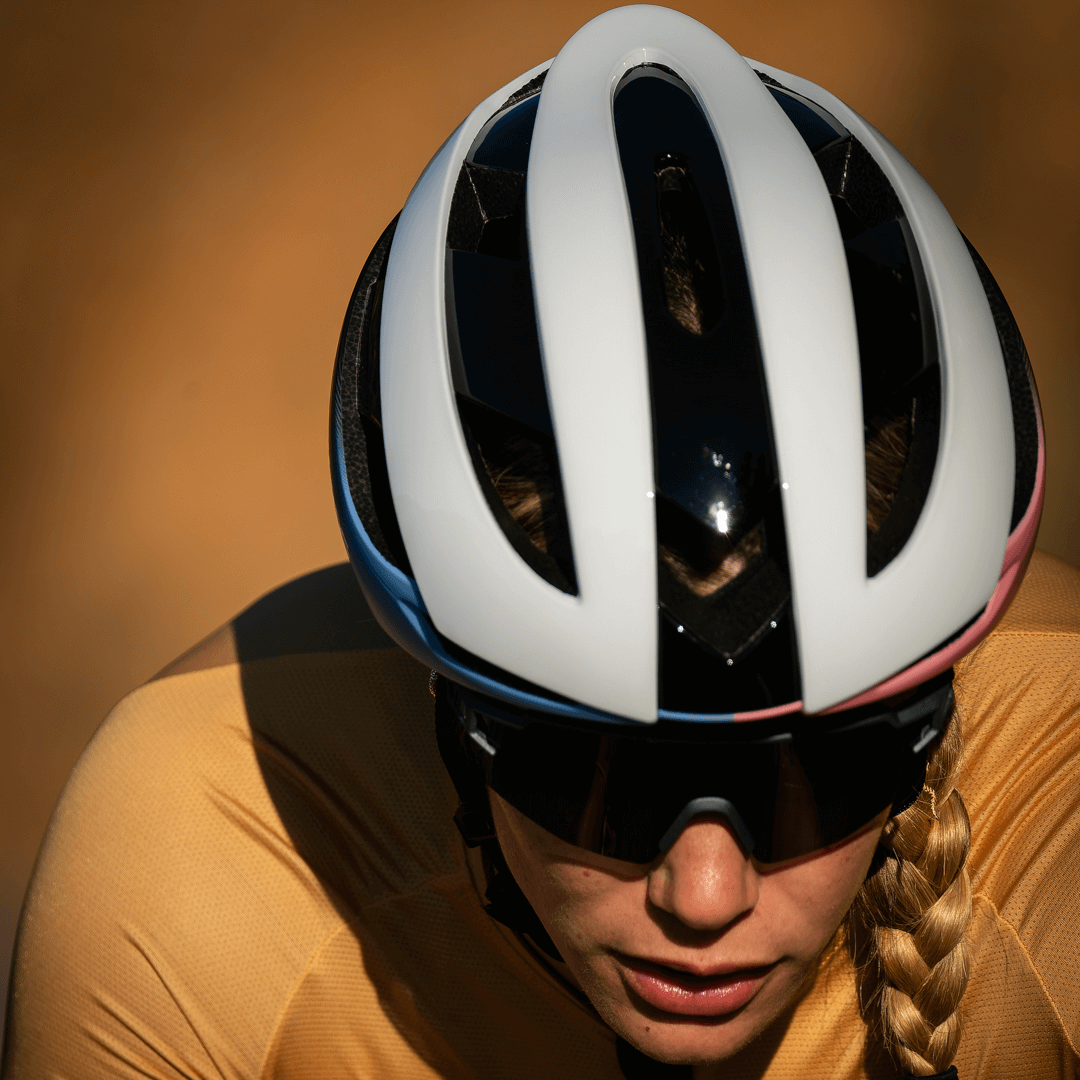
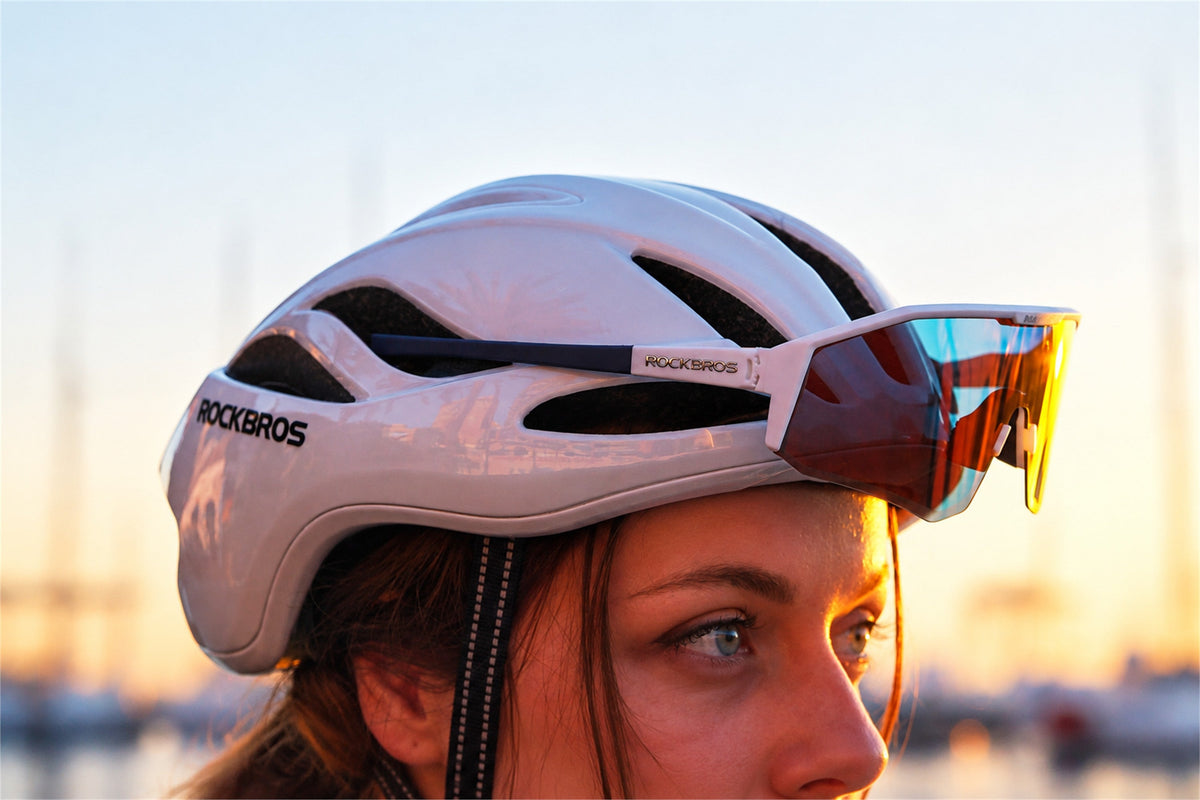
When you try a helmet, begin without tightening the dial to its limit. It should sit level rather than tipped back, with the front edge sitting low enough to protect the forehead without blocking your view. If it only stays in place after the retention dial is fully tightened, try a different size or shape.
Use the shake test
With the straps still loose, gently move your head from side to side and nod forward. The helmet should move with your skin rather than sliding around independently. It should feel evenly held, not gripped by one painful point. A little time in the shop or at home reveals more than a quick mirror check.
Adjust the retention system and straps in order
1. Set the rear retention dial
Turn the dial until the helmet feels stable, then stop. Over-tightening is not a sign of a better fit; it can create pressure and make you less likely to wear the helmet properly on longer rides.
2. Centre the side buckles
The strap junctions should sit just below each ear. Adjust both sides so the straps lie flat without twisting. Small changes here make a surprising difference to how secure the helmet feels.
3. Set the chin strap
Fasten the strap so it is snug but not uncomfortable. You should be able to open your mouth comfortably, but the helmet should not lift away from your head when you try to roll it backwards.
Choose features around the ride you actually do
For short town rides, a comfortable fit and a simple, quick adjustment system may matter more than low weight. For regular commuting, consider how the helmet works with your glasses, lights and weather layers. A visor can help some riders with low sun or spray, while others prefer an uncluttered shape. Reflective details and a colour that is easy to pick out can be useful extras, but they are not a replacement for lights and predictable riding.
For darker journeys, check the UK’s current requirements for cycle lights and reflectors before you ride; the official guidance is the right place for the rule details, rather than a helmet label or a social-media tip.
Know when to replace a helmet
Replace a helmet after a crash or a significant impact, even if visible damage is not obvious. Also inspect the shell, straps, buckle and retention system regularly. If the fit system no longer holds securely, or the padding has compressed enough to change the fit, it is time to reassess.
Five checks before your next ride
- The helmet sits level, not high on the back of your head.
- It stays stable before you tighten the dial fully.
- The side straps meet just below your ears.
- The chin strap is snug and comfortable.
- Your glasses, lights and outer layers work with the fit rather than against it.
A properly fitted helmet is a modest piece of kit with an important job. Take ten quiet minutes to size and adjust it, then check the fit again after a few rides. That small routine is more useful than chasing features you do not need.
Read the UK Government guidance on cycle lights and reflectors.